Showing posts with label memorials. Show all posts

Friday, 22 October 2010

Launch of the Association for the Study of Death & Society website...


Image: from a series of six engravings of memento mori by the German artist Alexander Mair, 1605, Monoscope

The Association for the Study for Death & Society (ASDS) has formally launched its website this month. The site features news and events, a photo gallery, profiles of the council members and regional representative of the Association, details of the DDD conference series, jobs, and links to other organisations. Additionally, members have access to discussion forums, a database of member’s research and teaching interests, and lists of member’s publications. Members are automatically listed in the database and receive favourable rates for the DDD conference series and the journal ‘Death Studies’.
ASDS promotes the study of death in the arts, humanities, social and allied sciences. To this end the Association will:

  • Foster and promote publication, conferences and multidisciplinary networks
  • Support academic professional development
  • Promote high quality, ethical research
  • Shape and influence policy and practice agendas
  • Support the teaching of death studies
  • Promote the widespread recognition of death studies
  • Represent the interests of the membership
If you would like more information about ASDS and how to become a member, visit the website at http://www.deathandsociety.org/index.php.

Sunday, 19 September 2010

Digital Death Day...


Digital Death Day
9th October, 9am - 5pm
The Centre for Creative Collaboration
The University of London


Death is a part of life and life has (to an extent) become digital.

This un-conference will be primarily concerned with provoking discourse around the social, cultural and practical implications of Death in the Digital World. Thus stimulating a reconsideration of how death, mourning, memories and history are currently being augmented in our technologically mediated society.

The archiving, networking and post mortem engagement of ‘digital remains’ leads us to consider what place digital information has in our lives legally, sentimentally and historically.

For further details, see here...

Monday, 30 August 2010

New book on dark tourism...

Image: the wreckage of the World Trade Centre, Steve McCurry

Edited by Philip Stone and Richard Sharpley of the Dark Tourism Forum, Tourist Experience: Contemporary Perspectives features three chapters dedicated to thanatourism. Set to be published in September, you can pre-order a copy here!

Sunday, 29 August 2010

Heritage that hurts...

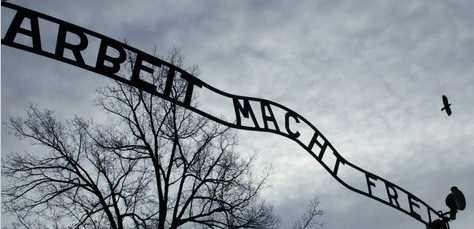
Image: 'Work sets you free', the gate at Auschwitz, Kvinnonet

From Auschwitz to Ground Zero: dealing with heritage that hurts is a new weekend-long course being offered by the Institute of Continuing Education at the University of Cambridge. The course examines how and why sites wounded by violent events have been remembered - or not. It will also explore why historic sites and monuments are specifically targeted for destruction. For more information and booking details, see here.


Using the Killing Fields of Cambodia, the Oklahoma City National Memorial, Ground Zero, Auschwitz and the Soviet Gulags among others as case-studies, we will reflect on how these 'dark tourism' sites are 'produced' and 'consumed'. We will ask: why tourists visit, what they experience while they are there and what messages they walk away with.

Thursday, 8 July 2010

In Loving Memory...

Image: We English

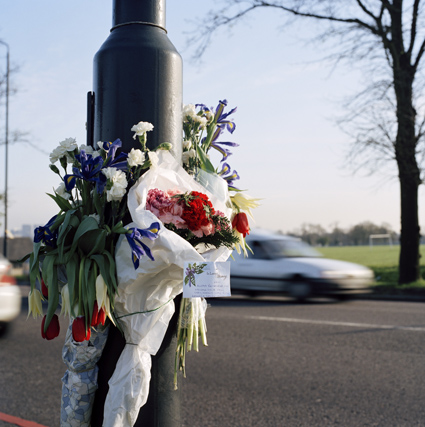
I watched a really interesting programme last night on BBC Two about contemporary ways of dealing with the grief of losing a loved one. ‘In Loving Memory’ examined how, as an increasingly secular country, we are moving away from the traditional setting of the church and graveyard as the locus of our grief and mourning to more individual, and often public, displays of loss. The programme features a myriad of interviewees and the ways in which they have coped with the loss of someone close – from roadside memorials to bedroom shrines and Facebook groups to memorial tattoos. An extremely emotive documentary that probes the complex emotions and needs of those who are left behind, as well as the inevitable friction caused when private grief spills into the public domain as with the case of roadside tributes, I highly recommend catching this on iPlayer if you can.